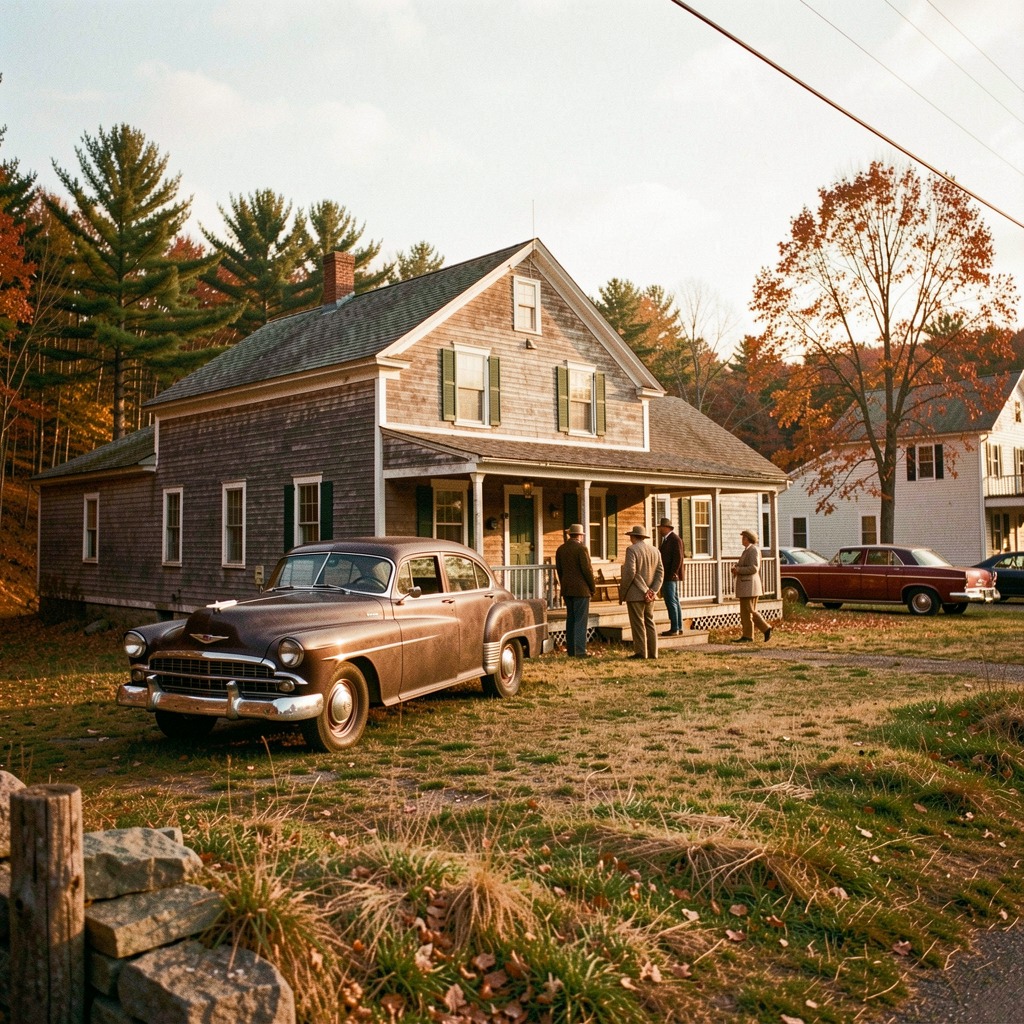
WILLOW CREEK — The 1969 special census, conducted by the Maine Department of Economic Development, shows Willow Creek’s population at 1,954 — the lowest since 1910, before the mill reached its full stride.
The decline represents a loss of approximately 250 residents since the 1950 census, a drop of more than 11 percent in less than twenty years.
“The children of Willow Creek are graduating and leaving,” the Gazette editorialized, “and the town has not yet found a reason for them to stay.”
The census confirms what residents have observed in their daily lives: fewer children in the school, fewer customers at the General Store, fewer names in the church register. The high school graduating class of 1969 numbered just 18 students — down from 42 in 1950.
“There are houses on Pond Road that have been empty for two years,” said Maeve O’Donnell of the General Store. “I know because I’m still getting the mail for people who moved away and didn’t leave a forwarding address.”
The mill, which once employed 158 workers, is now down to 98. The layoffs of 1966 have been followed by a gradual attrition, with positions left unfilled when workers retire or leave. The mill’s once-thriving night shift has not run since 1967.
“Young people see the mill shrinking, and they don’t see a future here,” said the Gazette’s editor. “They go to Bangor, to Portland, to Boston. And once they leave, they rarely come back.”
The population decline is not unique to Willow Creek. Across rural Aroostook County, small towns are losing residents to the cities. But the loss feels personal in Willow Creek, where the town’s identity has been so closely tied to its economic anchor.
“Willow Creek has survived hard times before,” Arthur Whitcomb wrote in his final editorial before his son took over the paper. “But the hard times were always followed by recovery. This decline feels different — not a cycle, but a transformation. The town that emerges on the other side may not look the same.”